
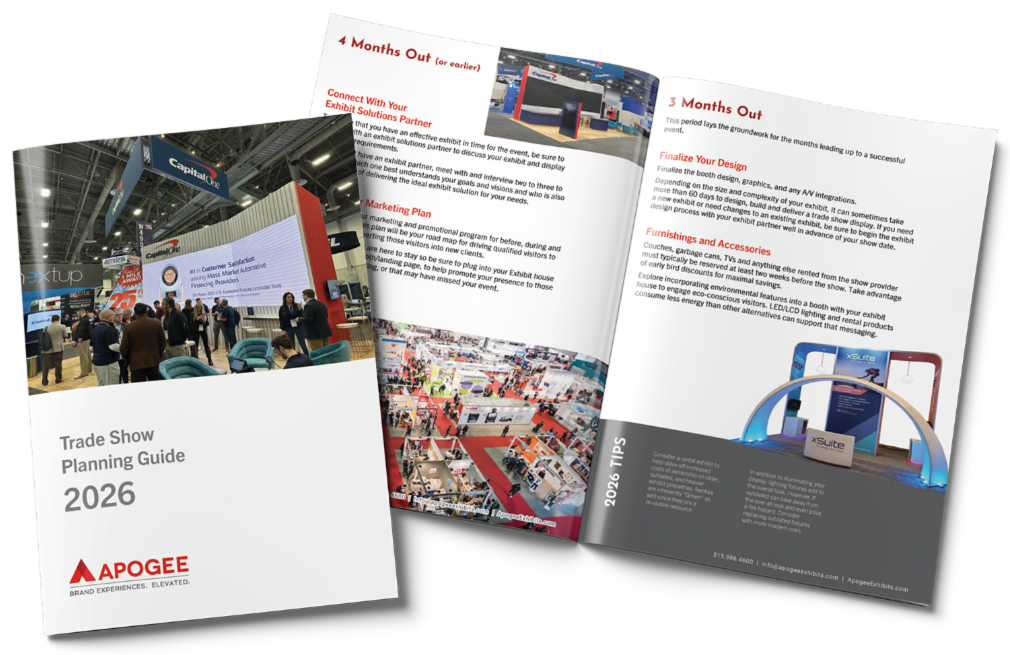
By Mark Taylor, President & CEO | Apogee Exhibits
2026 trade show trends are reshaping how exhibitors compete—learn the staffing strategies, budget justifications, and immersive design tactics that maximize ROI and win on the show floor.
IN THIS GUIDE:
- Ready to Start Planning?
- 2026 Trade Show Trends
- Booth Staffing Best Practices
- How to Justify Your Budget
Trade shows are back—and bigger than ever. After years of pandemic-related disruption, the exhibition industry has not only recovered but is evolving at a rapid pace. The global trade show market is projected to surpass $50 billion in revenue in 2025, with the U.S. market alone reaching $15.8 billion—exceeding pre-pandemic levels. With that growth, however, comes new pressure: rising costs, intensified competition for attendee attention, and increased scrutiny around ROI.
After more than three decades in the exhibit industry, I have watched these shifts unfold firsthand. The exhibitors who succeed are not always those with the largest budgets; they are the ones who understand their audience and execute with purpose. This playbook outlines the trends shaping trade shows in 2026, proven booth staffing strategies, and the metrics leaders need to justify continued investment.
2026 Trade Show Trends: What’s Shaping the Show Floor
Why it matters: Attention on the show floor is earned through experience, relevance, and execution—not square footage alone.
Immersive, Multi-Sensory Experiences
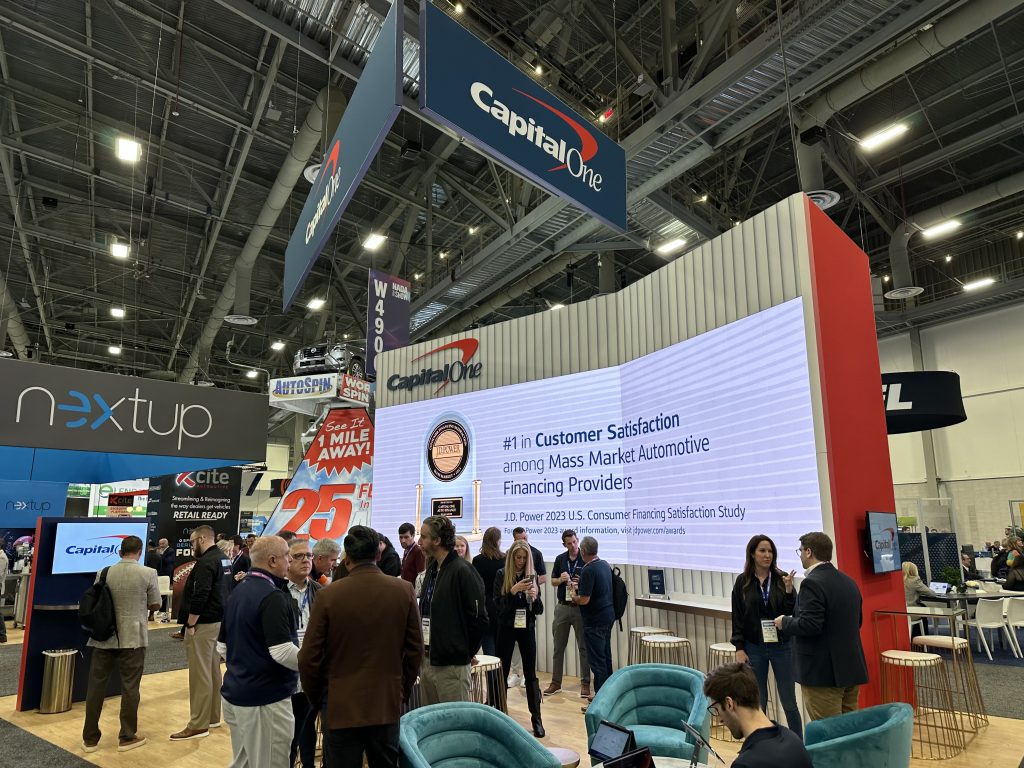
Static displays no longer meet attendee expectations. Leading exhibitors are designing multi-sensory environments that capture attention and create memorable brand interactions. Studies show that reinforcing brand messaging across multiple senses can increase recall by up to 70%.
Common executions include:
- Oversized product replicas or inflatables that act as visual anchors and traffic drivers
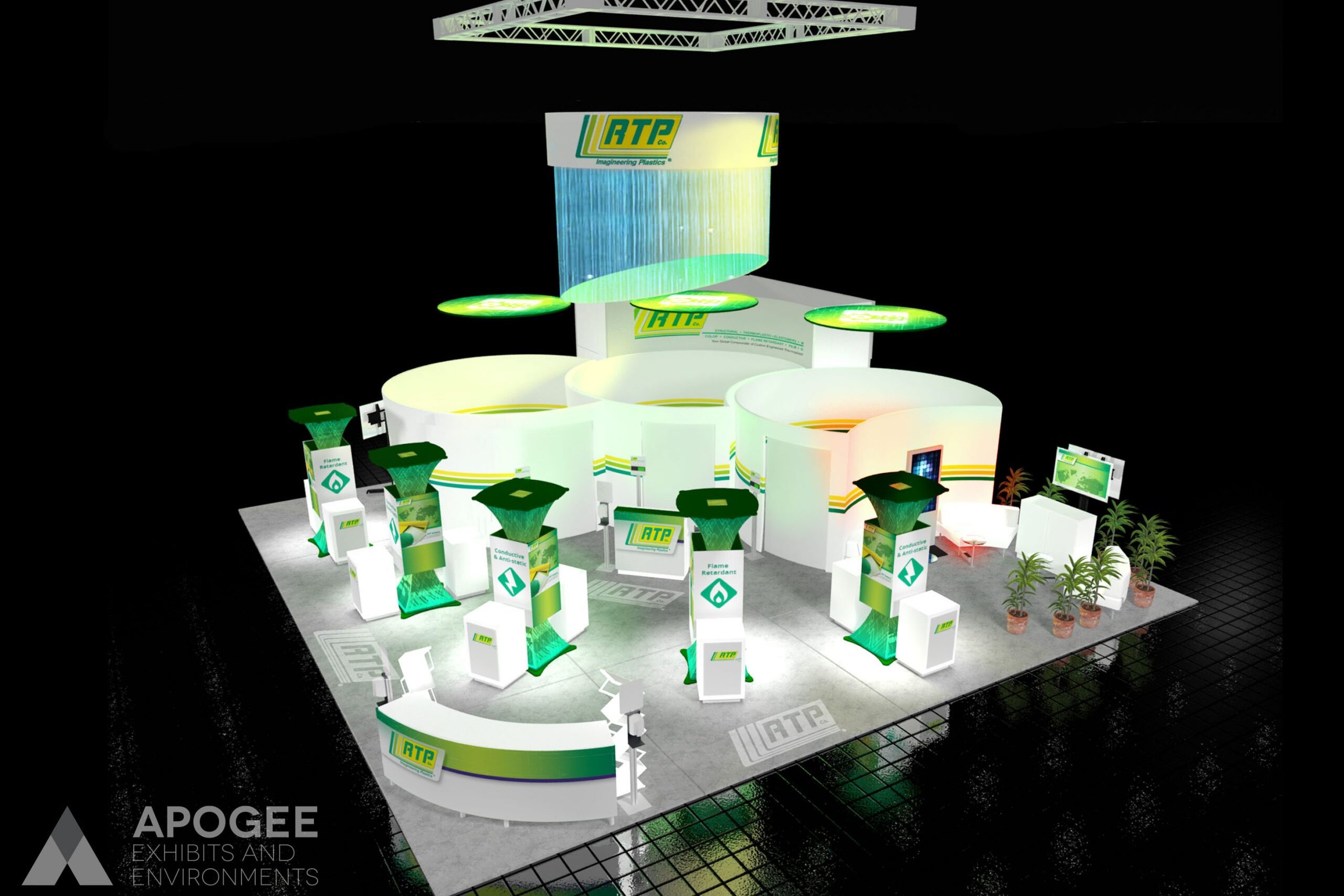
- LED video walls and backlit graphics, now standard rather than premium features. See how LED transforms booth design.
- AR and VR demonstrations that showcase products beyond physical constraints
- Themed entrances that transport attendees into a brand environment
Sustainability as the Standard
Sustainability has shifted from a differentiator to an expectation. Many organizers now require environmentally responsible exhibit practices, and adoption continues to accelerate. Freeman reports a significant increase in the use of eco-friendly materials in booth design, and sustainability is a primary driver of growth across the global events industry.
How exhibitors are responding:
- Modular, reusable exhibit systems
- LED lighting and energy-efficient technology
- Recycled flooring and rental furnishings
- Fewer disposable giveaways in favor of practical, premium items
- Rental components that can be reconfigured for multiple footprints
Data-Driven Decision Making
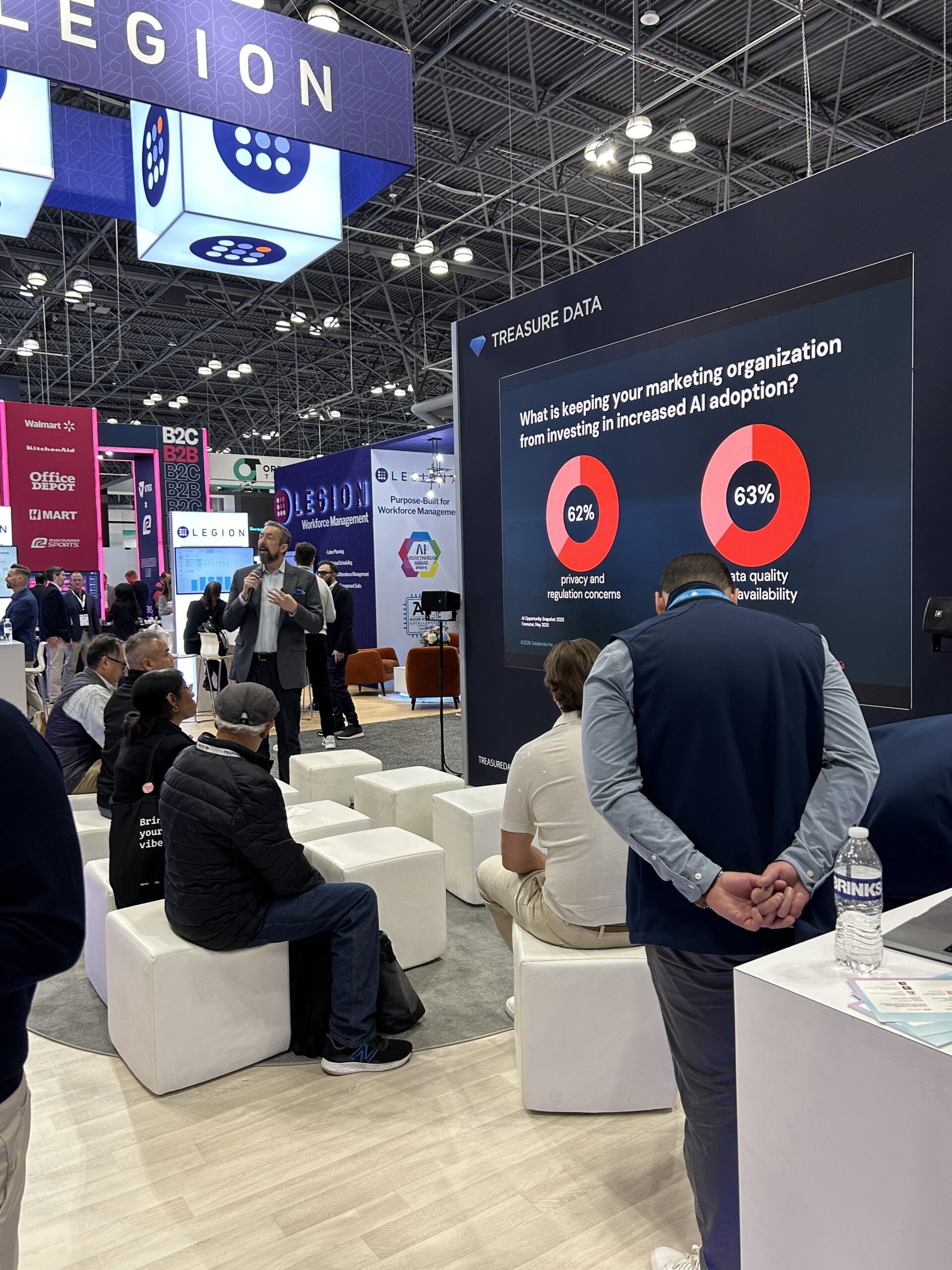
“What gets measured gets funded.” More than 70% of trade show planners now use data analytics to evaluate performance. Tools such as heat mapping, engagement tracking, and AI-powered survey insights allow exhibitors to optimize booth layouts, staffing levels, and messaging—often in real time.
Gamification and Interactive Engagement
Product education is increasingly interactive. Brands are incorporating games, challenges, and digital activations to encourage participation and deepen engagement. QR-based experiences allow attendees to unlock demos, content, or exclusive access while giving exhibitors actionable engagement data.
Hybrid and Extended Reach
Hybrid strategies extend the lifespan of trade show investments. Booths are now designed to serve both in-person and remote audiences through live-streamed demos, virtual tours, and content hubs that repurpose presentations well beyond the event itself.
Best Practices for Trade Show Booth Staffing
Why it matters: Booth staff performance accounts for approximately 85% of exhibitor success—yet training remains widely underutilized.
According to Exhibitor Online, 26% of exhibitors train staff for most or all trade shows, and more than half rarely or never conduct training. This gap represents a significant competitive advantage for organizations that prioritize preparation.
Calculate Your Staffing Needs
A practical guideline is to allocate one staff member per 50 square feet of exhibit space:
With 75% of exhibitors facing pressure to reduce costs—and 31% feeling strong pressure from senior leadership—justifying your trade show investment requires hard data. Here’s how to build your case:
| Size (ft) of Booth | Number of Staff Members |
| 10×10 booth 100 sq. ft. | 2-3 staff members |
| 20×20 Booth 200 sq. ft. | 6-8 staff members |
Overcrowding can deter or intimidate attendees, while understaffing leads to missed opportunities.
Define Clear Roles
- Hosts/Greeters: Establish first impressions and welcome attendees
- Presenters: Lead demonstrations and product storytelling
- Crowd Gatherers: Proactively draw traffic from aisles
- Activity Coordinators: Manage games, raffles, or interactive elements
- Lead Generators/Sales Representatives: Qualify prospects and capture data
Invest in Training
Visitor interaction drives recall—approximately 80% of what attendees remember centers on staff engagement. Despite this, training often represents only 1% of total show budgets.
A pre-show training session should cover:
- Show objectives and success metrics
- Product knowledge and core messaging
- Lead qualification criteria and retrieval systems
- Booth layout and visitor flow
- Competitive positioning
- VIP protocols
Enforce Professional Etiquette
Non-negotiable standards include:
- No eating, drinking, or sitting in the booth
- No phone use or email checking on the floor
- Open body language and active eye contact
- Greeting attendees with open-ended questions
Schedule for Sustainability
Trade shows are marathons, not sprints. Schedule staff rotations that allow for meals, breaks, and recovery. Fatigued staff are less engaged and less effective. Hold daily debriefs to identify what’s working and adjust your approach for the next day.
Justifying Your Trade Show Budget: The Numbers That Matter
Why it matters: With cost pressure increasing, executive buy-in depends on clear, defensible performance metrics.
With 75% of exhibitors facing pressure to reduce costs—and 31% experiencing strong pressure from senior leadership— trade show budgets are under greater scrutiny than ever. In this environment, continued investment can no longer rely on anecdotal success or legacy participation. It must be supported by clear, quantifiable performance data.
The ROI Reality
When executed strategically, trade shows deliver consistent returns:
- Average ROI of 4:1: Exhibitors generate approximately $4 in revenue for every $1 invested in trade show participation.
- High-performance benchmark: 14% of Fortune 500 companies report achieving a 5:1 return on trade show investment.
- Executive confidence: 52% of business leaders identify trade shows as the highest-ROI marketing channel.
- B2B validation: 78% of B2B marketers rank in-person trade shows as the most effective offline channel for ROI.
The Attendee Advantage
Trade show audiences deliver unique value:
- More than 80% of attendees have buying authority
- Over 90% attend specifically to discover new products
- Approximately two-thirds are new prospects
- More than half request follow-up after the event
Cost Efficiency
Trade show leads convert at a lower cost than many traditional sales methods. Face-to-face engagement reduces the number of sales calls required to close and accelerates pipeline development.
Brand Visibility
There is also a cost to absence. Brand perception declines when companies fail to appear at key industry events—an impact felt even by established global brands. Presence matters.
Frame the Budget Strategically
When presenting to leadership, focus on:
- Pipeline Generated: Quantify and report the total dollar value of sales opportunities originating from the event.
- Cost per Qualified Lead: Benchmark trade show performance against other acquisition channels, including digital campaigns and outbound outreach.
- Lead Quality Metrics: On average, one marketing-qualified lead is generated for every seven booth visitors; top-performing exhibitors achieve two to three MQLs per seven visitors.
- Market Intelligence: Capture competitive insights, customer feedback, and emerging industry trends observed on the show floor.
- Relationship Value: Measure long-term impact through customer retention, partnership development, and brand awareness indicators.
The Bottom Line
Trade shows in 2026 will not be defined by size, but by strategy. Exhibitors that prioritize immersive experiences, invest in well-trained staff, apply data to decision-making, and measure performance with discipline will outperform their peers.
The opportunity is substantial. With 95% of exhibitors favoring in-person events and 37% of U.S. businesses planning to increase trade show investment, the upside is clear. The differentiator, however, is execution—aligning booth design, staffing, and measurement to drive measurable results.
Success begins long before the show floor opens. Define clear objectives, staff intentionally, design with purpose, and establish a measurement framework in advance. This is how trade show participation moves from an expense to a strategic growth driver.
Ready to Elevate Your Next Trade Show?
Apogee Exhibits specializes in creating brand experiences that captivate audiences and deliver measurable ROI. With over 30 years of industry expertise, we help exhibitors stand out on crowded show floors.
Let’s discuss your 2026 strategy.
